
Search Delaware Probate Court Records
Delaware probate court records document how estates are settled after a person dies. These filings are held at the Register of Wills in each of the state's three counties and cover wills, estate inventories, letters testamentary, administration accounts, and guardian bonds. Anyone who needs to search Delaware probate court records for a deceased relative, trace property ownership, or confirm what was left to an heir should start by identifying which county the person lived in at the time of death. This guide covers how to find and access probate filings online, in person, and by mail across New Castle, Kent, and Sussex counties.
Delaware Probate Court Records at a Glance
Delaware Probate Court Records at the Public Archives
The Delaware Public Archives maintains the primary index for Delaware probate court records across all three counties, covering filings from approximately 1680 to 1925. This is the single most important resource for anyone researching older estate records in the state. The database indexes the names of deceased individuals for whom probate files were created and includes searchable fields for entry number, name, date, pagination, filmed status, scanned status, and county. Each entry may refer to the date of the will or the date probate proceedings formally began.
The Research Room is located at 121 Martin Luther King Jr. Blvd. North, Dover, DE 19901, and is open Monday through Friday from 8:00 AM to 4:15 PM. You can reach the staff by phone at (302) 744-5000 or by email at archives@delaware.gov. New Castle and Kent County probate records are available on self-service microfilm in the Research Room. Sussex County records are in the process of being filmed. To order copies of original documents, send an email to archives@delaware.gov with all information from the index entry. Staff will provide a price quote within 10 business days. You may request multiple items in the same email.
The archives index shows each person's name, the years of probate, the number of pages in the file, and whether the folder has been filmed or scanned. That last detail matters because it tells you what format is available before you make a trip or place an order.
The Delaware Public Archives probate database covers records from the colonial era through 1925 and lets you search by name, county, and date from any computer.
Copies of microfilm are available for purchase through the archives, and in-person viewing requires you to bring all document information to the Research Room in Dover.
Delaware Estate Records: What Probate Filings Contain
Estate records in Delaware document how a person's property was transferred to heirs and beneficiaries after death. Historians and genealogists prize these records because they often contain details about land, household goods, and family relationships that appear nowhere else. A single probate file may list the decedent's date of death, the names of a spouse and children, birth order of heirs, siblings and their spouses, parents' names, and the residence locations of all named persons. It can also show ownership of land, business names, military service, and guardianship arrangements for minor children.
Wills are recorded at the Register of Wills office in the county where the person lived. You look up the name in the main index to find the reference number for the will. At the Register of Wills office, a $2.00 fee per name searched covers a letter outlining what records are on file. The Delaware Public Archives estate records research guide explains how to trace property using the chain of title and cross-reference probate records with other county filings.
Inventories are another key record type. They typically list the contents of the house and outbuildings, giving a value for each item. Room-by-room inventories may let researchers reconstruct how a home was furnished and used. Some probate files also include survey maps showing how different parts of a property were divided, and occasionally sketches of buildings. These records can be remarkably detailed.
If a person died leaving minor children and did not leave a will, the Orphans' Court handled the estate. The court assigned a committee to survey the condition and value of real and personal property before transferring it to heirs. Guardian accounts recorded the ongoing management of those assets on behalf of minor children, showing income received and expenses paid. Chancery Court stepped in when estates needed to be divided among heirs and the parties could not agree.
The estate records research guide at the Delaware Public Archives provides step-by-step instructions for using probate files in house history research and genealogical work.
Published reference works are also useful. Donald O. Virdin's "Colonial Delaware Wills and Estates to 1800: An Index" (1994) covers all three counties alphabetically. The National Society of Colonial Dames published "A Calendar of Delaware Wills, New Castle County, 1682-1800" in 1911. Leon DeValinger compiled separate calendars for both Kent County (1944) and Sussex County (1964) probate records from 1680 to 1800.
Note: Probate records at the University of Delaware Morris Library in Newark include microfilm collections for wills, probates, court records, and census records, supplementing what is available at the Public Archives.
Search Delaware Probate Records Online
Delaware's CourtConnect system is the official online case management tool provided by the Delaware Courts. It covers civil, criminal, and traffic cases across all counties. Users can search by person name, business name, or case type; look up judgments against a person or business; and generate docket reports showing the complete history of a case. Delaware handles approximately 3,000 estate and probate cases annually across its courts. CourtConnect is a useful tool for finding active or recent cases, though historical probate records from before 1925 are better accessed through the Delaware Public Archives database.
Most court records in Delaware are public under the Delaware Freedom of Information Act. The state's unified court system is overseen by the Administrative Office of the Courts. You do not need to be a party to a case to look up records. Some files are sealed or restricted, including juvenile records, adoption files, mental health proceedings, and certain family law cases, but ordinary estate and probate filings are generally open.
The CourtConnect system lets you search for current and recent estate filings by party name, making it a practical first stop when you need to find a probate case from the past few decades.
For older records not yet in the digital system, the Delaware Public Archives search interface allows sorting by any of the available fields and provides the entry number you will need to order copies.
Register of Wills: Delaware's Probate Authority
Delaware's probate system is county-based. There are no municipal probate courts. Each of the three counties has its own Register of Wills who is elected in a general election and commissioned by the Governor for a four-year term. The Register's primary responsibilities are to probate wills, issue letters of administration or letters testamentary, and settle estates. The office has been a fixture of Delaware law since 1706, and under the current Register of Wills structure, the officeholder serves as a clerk of the Court of Chancery for probate matters following a 1974 reorganization.
Anyone who has custody of a will is required by law to produce and deliver it to the Register of Wills within ten days of learning of the testator's death. Failure to do so can result in liability for damages or a contempt citation. Wills are proved before the Register in the county where the testator lived at the time of death. If the person was not a Delaware resident, the will is filed in the county where the person owned property.
The Register has the power to issue citations, subpoenas, attachments, and capias; to administer oaths; to issue notices; and to certify and authenticate copies of instruments and records. Any deputies appointed to the office carry the same authority. Those deputy appointments are recorded at the Office of the Recorder of Deeds.
Original wills may be deposited for safekeeping at the Register's office under Delaware Code. The Register seals the will in an envelope, numbers it, records the date, and indexes it alphabetically. When notice of the testator's death arrives, the Register opens the envelope and places the will in a pending file to await probate. The safekeeping fee is $5.00 under Delaware Title 12.
The Register of Wills agency history at the Delaware Public Archives traces the office from its colonial origins through the current four-year elected term structure.
The three Register of Wills offices are located in Wilmington (New Castle County), Dover (Kent County), and Georgetown (Sussex County).
Delaware Court of Chancery and Probate Matters
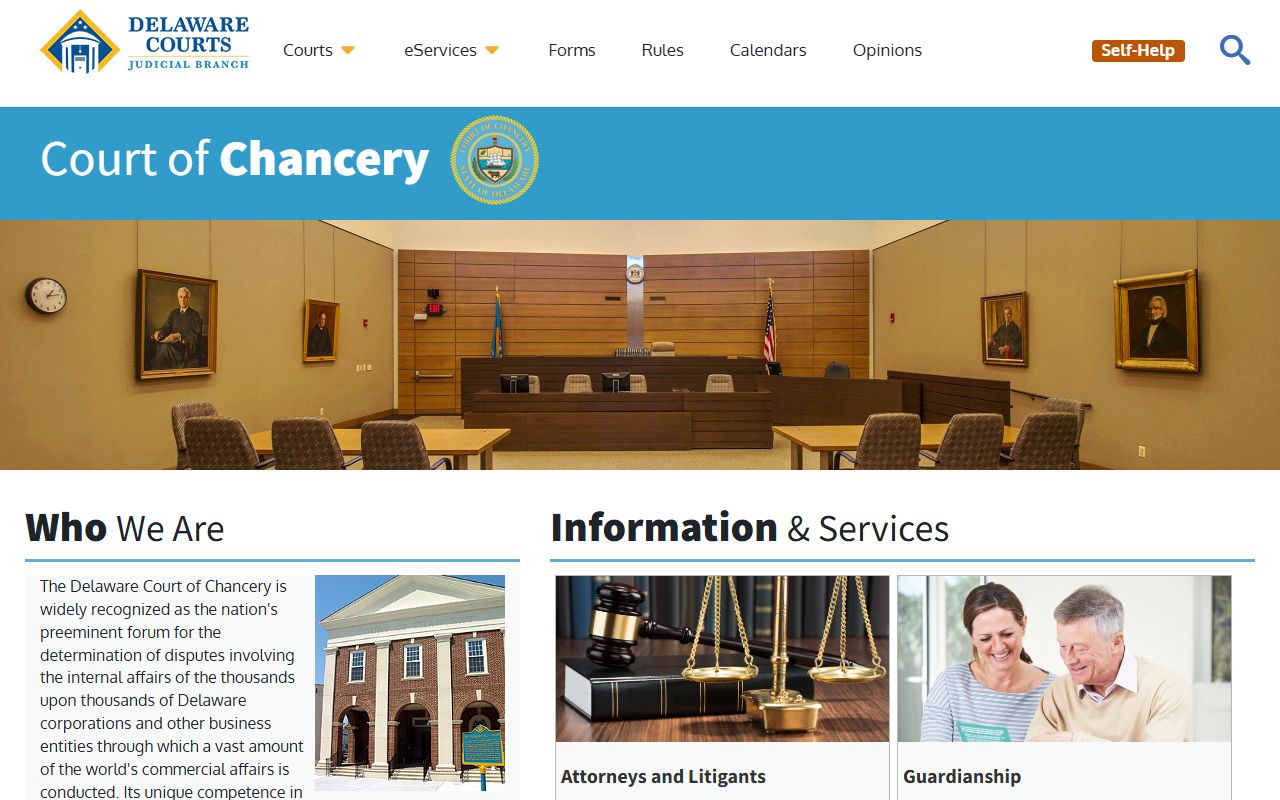
The Delaware Court of Chancery handles contested probate matters while the Register of Wills manages administrative probate. Appeals from a Register's decision go directly to the Court of Chancery. In cases where the Register has a personal interest in a probate question, jurisdiction shifts automatically to the Chancery Court. There is a Chancery Court in each of Delaware's three counties.
When a person dies and leaves a valid will, the process begins with filing a Petition for Authority to Act as Personal Representative (Form 1). The court then issues Letters Testamentary for testate estates, which grants the named executor authority to act on behalf of the estate. For intestate estates where no will exists, the court issues Letters of Administration to a court-appointed administrator. Both types of letters are essential for accessing bank accounts, transferring property, and managing any debts of the estate.
Delaware offers a simplified procedure for small estates. If the decedent's personal property is valued at $30,000 or less and they owned no real estate solely in their name, a Small Estate Affidavit may be used in place of full probate proceedings. This speeds up the process significantly for modest estates. New Castle County mandates electronic filing for most probate documents through the File and Serve Delaware system.
The Court of Chancery is internationally recognized for handling complex business disputes, which is why so many corporations incorporate in Delaware. That reputation extends to estate matters involving corporate assets, making Delaware courts particularly experienced in handling complex probate filings.
The Delaware Court of Chancery page explains the court's jurisdiction over probate matters and provides contact information for all three county locations.
Filing fees in Delaware are generally calculated based on the value of the estate, with Sussex County charging a closing fee of 1.25% of the net personal estate value.
Delaware Probate Law and Title 12
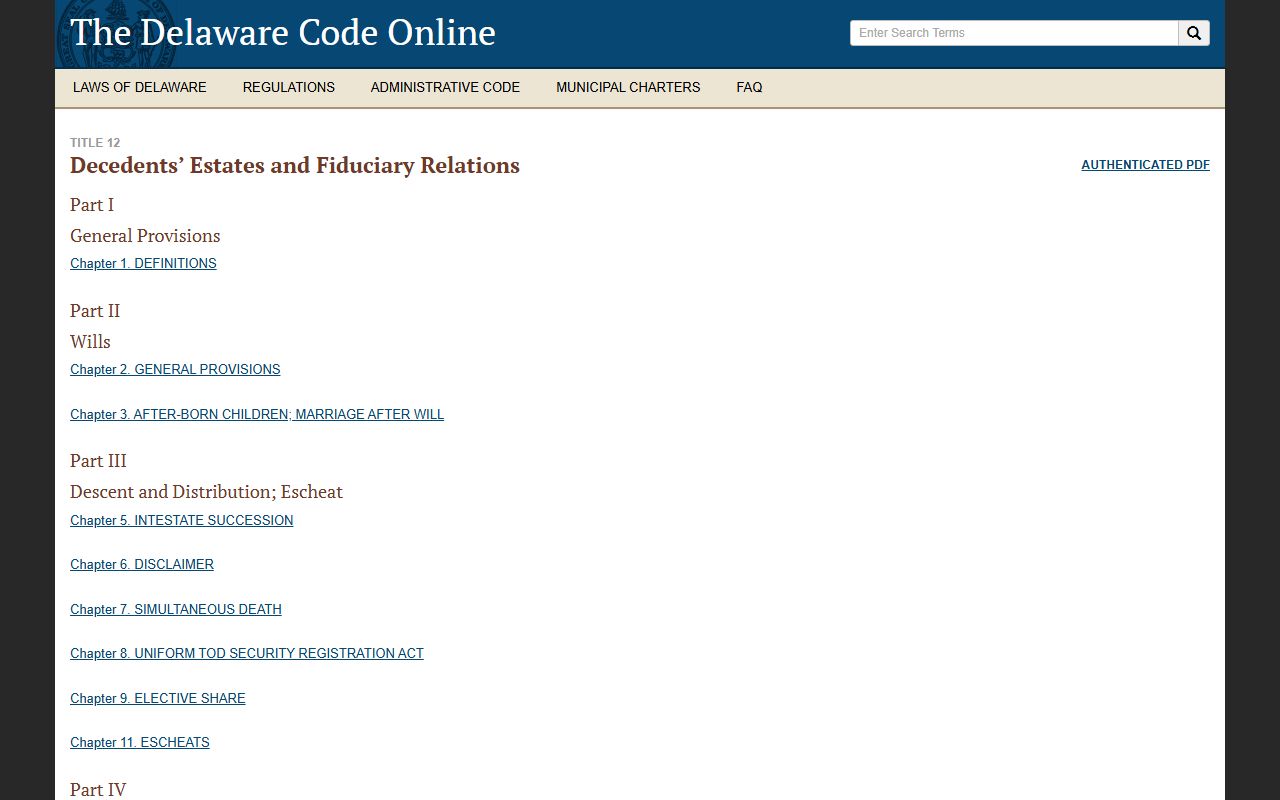
Title 12 of the Delaware Code governs Decedents' Estates and Fiduciary Relations. This title contains the full statutory framework for probate proceedings, estate administration, guardianships, and related matters across all three counties. Chapter 25 within Title 12 establishes the authority and responsibilities of the Register of Wills in each county, including the bond requirement that ensures the Register faithfully performs their duties. That bond is filed with the Recorder of Deeds.
Section 2513 of Title 12 governs the deposit of wills for safekeeping. A testator, attorney-in-fact, or attorney at law may deposit an original will at the Register of Wills office in any county for a fee of $5.00. The testator may later examine the contents of the envelope at the office for an additional $1.00 fee. Title 12 also includes detailed provisions for guardian accounts, reporting requirements for guardians of minor children, and the procedures for appointing administrators when no will exists.
Title 12 also governs the timeline for estate administration. Creditor claim periods, inventory filing deadlines, and accounting requirements are all set out in this statute. In Sussex County, the office charges a closing fee of 1.25% of the net personal estate value when settling accounts, as established under the fee schedule for that county.
The full text of Title 12 is available at the Delaware Code website, searchable by chapter and section, and covers everything from initial filing through final distribution of assets.
Note: Laws change. Always verify current procedures and fee amounts directly with the Register of Wills in the relevant county before opening an estate.
Historical Delaware Probate Records and Collections
Free access to historical Delaware probate court records is available through several online platforms. FamilySearch provides access to "Delaware, Wills and Probate Records, 1676-1971" as well as "Delaware, Wills and Administrations, 1683-1947" with both index and image access. These collections cover all three counties and include wills, administrations, and guardian accounts. The Ancestor Hunt guide to free Delaware probate records lists and explains each available collection in detail, including how to navigate FamilySearch and identify which sub-collections have browsable images.
Major historical collections include Delaware Orphan Court Records (1680-1978) covering nearly 300 years of proceedings for all three counties. New Castle County collections include Probate Case Files (1680-1956), Wills (1682-1854), and an Index to Wills (1682-1885). For Kent County, available records include Wills (1680-1860), an Index to Wills (1680-1948), Guardian Accounts, and Probate Case Files (1935-1955). Sussex County collections cover Guardian Accounts, Orphan's Court Dockets and Minute Dockets (1728-1802), Wills (1682-1851 and 1851-1959), and estate case files from 1700 through 1956.
Some FamilySearch collections require access through a Family History Center or affiliated library. If a collection shows a camera with a key icon, it is not freely viewable online and requires an in-person visit to a participating location.
The free Delaware probate records guide explains each available collection and what information each one contains, including whether images are browsable online.
Many of the oldest records were abstracted and published in print volumes before digital access existed. Those published indexes remain valuable for locating references that may not yet appear in online databases.
Historical Society of Delaware Research Resources
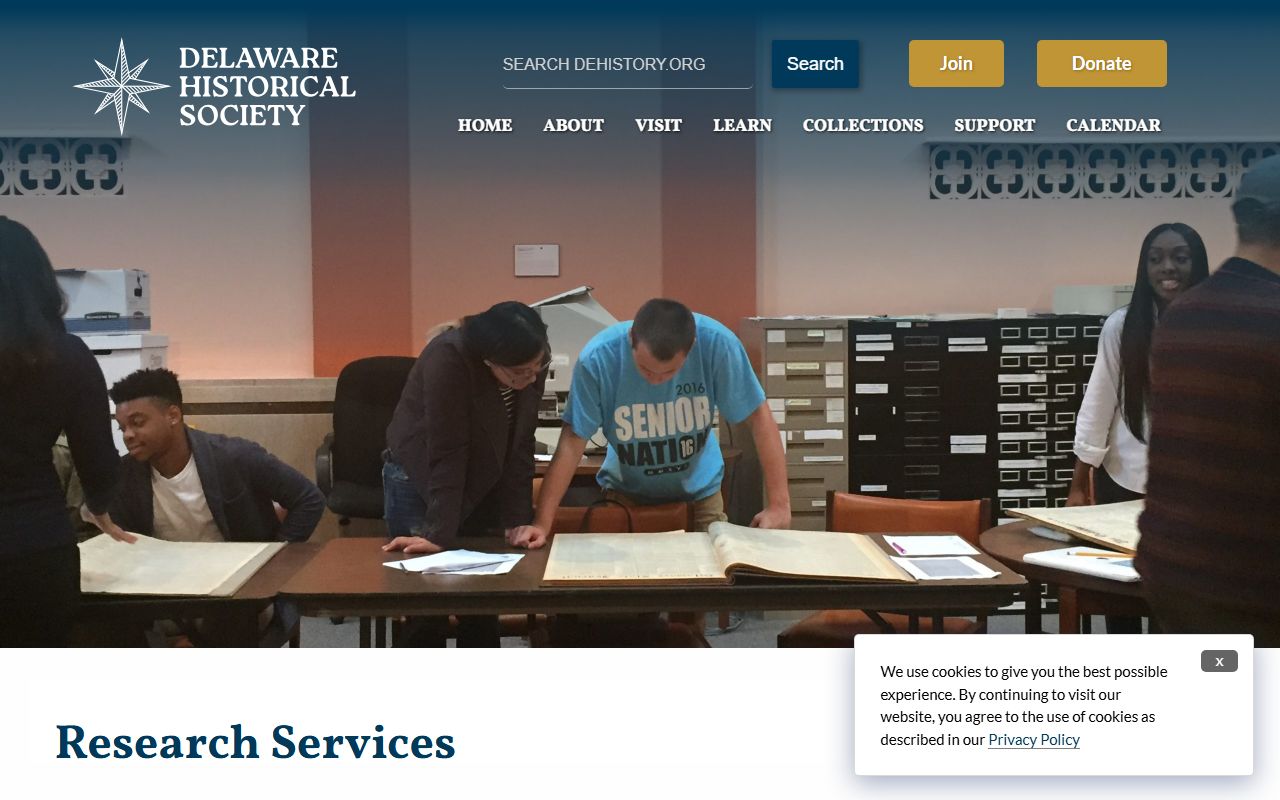
The Historical Society of Delaware is located in Wilmington and maintains a research library with significant manuscript collections, family papers, photographs, maps, and published local histories. Probate-related materials for New Castle County and Wilmington are held within larger manuscript collections organized by testator name rather than in a separate probate section. Researchers working on estate histories, property transfers, and family relationships will find these collections a useful supplement to official court filings.
Collections at the Historical Society include naturalization records from 1829 to 1858, marriage records, business records that often contain estate-related documents, personal papers with correspondence about inheritance, and organizational archives with records of bequests and charitable distributions. Visual materials such as photographs and maps can help interpret property descriptions found in estate inventories.
The library provides research assistance for those who cannot visit in person. Researchers can submit inquiries about specific records or individuals. Materials must be used in the reading room and cannot be checked out. The library has specific hours and may require appointments for certain collections.
The Historical Society of Delaware research page provides current hours, contact information, and collection access policies for planning your visit.
For New Castle County specifically, the Historical Society's Wilmington collections complement what the Delaware Public Archives holds in Dover, covering manuscript materials and published local histories not found at the state archives.
Delaware Courts and Access to Probate Records
Delaware operates a unified state court system overseen by the Administrative Office of the Courts. The Chief Justice of the Delaware Supreme Court serves as the administrative head. Courts across all three counties handle different types of cases, and the volume reflects the size of each court. The Court of Common Pleas handles approximately 98,000 filings per year. The Justice of the Peace Court processes over 215,000 filings annually. The Superior Court sees about 15,000 cases per year, while the Court of Chancery handles roughly 1,300 filings. Probate and estate cases account for approximately 3,000 filings across all Delaware courts each year.
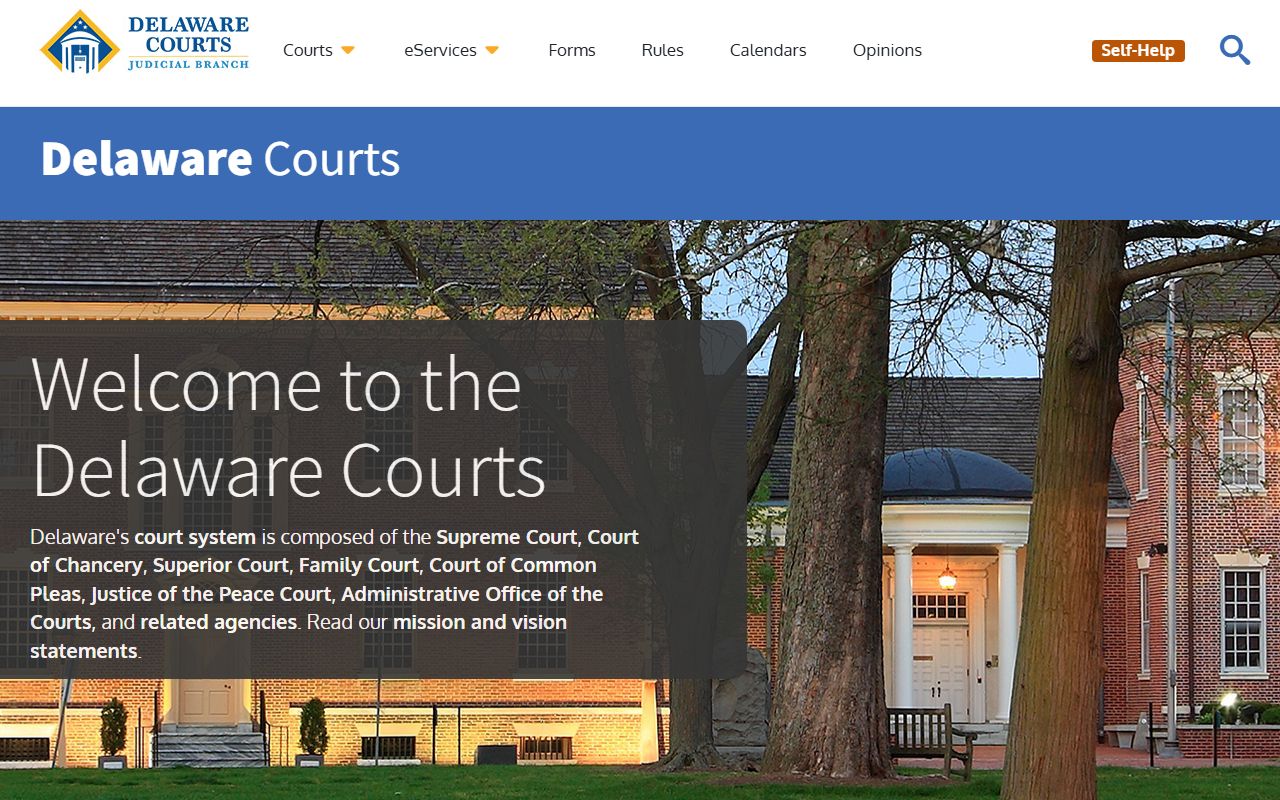
The Delaware Courts website provides contact information for every court in the state, links to forms, and explanations of which court handles which types of matters. The site also links to CourtConnect for online case searches. Most records are public and accessible without an account. Restricted records, including juvenile files, adoption records, mental health proceedings, and sealed family law cases, require a court order to access.
Delaware probate court records filed after 1925 are maintained at the Register of Wills in the relevant county rather than at the Delaware Public Archives. Contacting the Register's office directly is the correct step for any estate filed in recent decades.
The Delaware Courts official site is the starting point for understanding which office or court handles specific record types.
Note: Each county's Register of Wills office has its own specific hours, fee schedule, and procedures. Contact the correct county office before visiting or mailing a request.
State of Delaware Portal and Record Updates
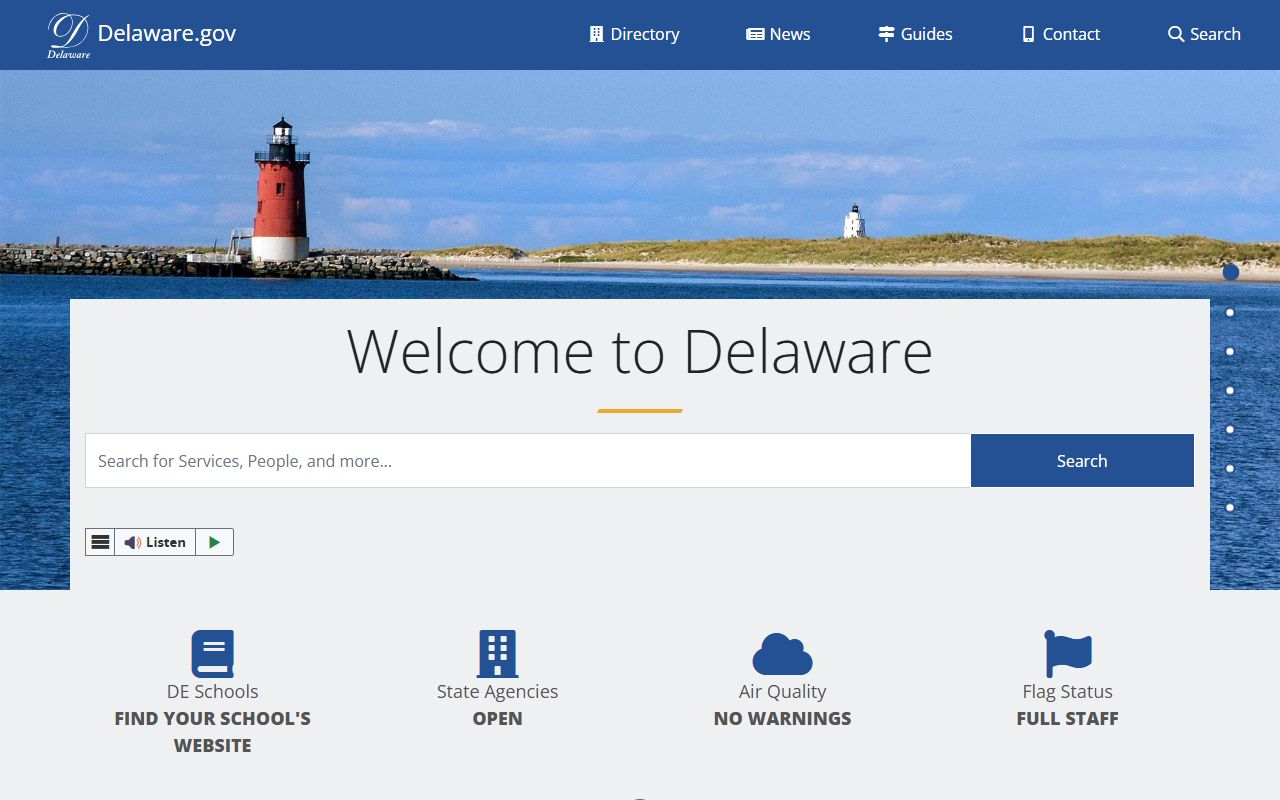
The State of Delaware portal at delaware.gov provides a central gateway to all state agencies and services, including links to court systems, the Public Archives, and county government resources. From the portal you can navigate to probate-related services, find agency contact information, and access forms for estate administration across all three counties.
Delaware county offices occasionally transition financial and records systems. Sussex County, for example, announced a system transition in April 2026 that limited services during the changeover period. The Delaware State News at news.delaware.gov publishes official announcements about court system updates, office closures, and service changes that may affect access to probate records. Checking that page before planning a courthouse visit can save a wasted trip.
The State of Delaware portal is also where residents can find links to vital records, the Division of Revenue for estate tax matters, and the Secretary of State's office for related business filings.
The State of Delaware portal at delaware.gov offers access to all state agencies from one location, including the courts and archives.
System updates are announced at news.delaware.gov and on individual county office websites when service changes affect probate record access.

Staying current with official announcements ensures you contact the right office and get accurate information about fees, hours, and filing procedures.
Browse Delaware Probate Records by County
Delaware has three counties, each with its own Register of Wills that handles all probate court records for that area. Select a county below to find local office details, fees, and resources specific to that jurisdiction.
Probate Court Records in Major Delaware Cities
Residents of Delaware's cities file estate matters at the Register of Wills in the county where they live. Select a city below to find which county office handles probate filings for that area and what resources are available locally.